

Beyond the Beach: The Human and Economic value of living in a coastal Country
Why do so many of the world’s happiest, healthiest and most productive societies have one thing in common? They live in close relationship with water.
The answer is not as simple as sea views, warmer weather or weekends at the beach. A growing body of research suggests that proximity to natural environments - particularly the coast - can influence how people feel, move, interact and recover from the pressures of everyday life.
At the same time, coastal geography can shape an entire economy. It supports tourism, ports, energy, trade, marine technology and new forms of sustainable innovation.
Portugal offers a particularly compelling example. Its Atlantic location is more than a feature of the landscape. It is part of the country’s culture, its international identity and its long-term economic proposition.
The Ocean as part of everyday life
Living near the sea changes the rhythm of a place. The coast creates opportunities for walking, swimming, surfing, sailing and spending time outdoors. It provides spaces where people meet, exercise, or simply pause. In cities and communities where daily life can feel increasingly fast and digitally saturated, that access may have measurable value.
Researchers commonly describe oceans, rivers, lakes and other bodies of water as “blue spaces.” Reviews of the scientific literature have associated exposure to these environments with improved wellbeing, positive mood, greater physical activity and, in some studies, better self-reported mental health.
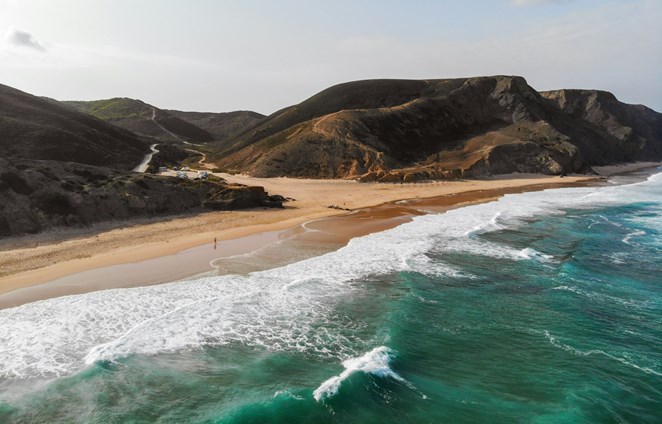
A systematic review of urban blue-space research found positive population-level associations with general health, mental health, obesity and mortality. Another research overview concluded that living near or spending time around coastal and inland waters is frequently associated with better mental health and wellbeing.
The evidence is not limited to people’s impressions of scenic surroundings. An experimental study involving repeated short walks found that walks in blue-space environments benefited participants’ mood and wellbeing, although the researchers did not observe corresponding improvements in the cardiovascular measures examined.
Research led by the University of Exeter has also found that people living nearer the coast reported better general and mental health, with part of the relationship explained by greater levels of physical activity.
From personal wellbeing to collective value
Quality of life is sometimes treated as a soft measure, important to individuals but secondary to economic performance, but that distinction is becoming increasingly outdated.
Companies compete for skilled employees. Cities compete for entrepreneurs. Countries compete for investment, knowledge and internationally mobile talent. In this environment, the places in which people want to live are often the same places in which they want to build companies, establish teams and make long-term commitments.

Portugal combines many of these elements. According to the OECD’s Health at a Glance 2025, life expectancy in Portugal stood at 82.5 years, 1.4 years above the OECD average. A separate 2025 EU country health profile placed Portuguese life expectancy at 82.7 years in 2024, approximately one year above the EU average.
Portugal also ranked seventh in the 2026 Global Peace Index, maintaining its position among the world’s most peaceful countries.
These outcomes cannot be attributed to coastal living alone. They reflect institutions, public policy, social conditions, healthcare, diet and many other factors. But they form part of a broader environment in which quality of life can become an economic advantage.
When people feel secure, connected and able to sustain a healthier daily routine, a country becomes more attractive not only as a destination, but as a place in which to live, work and invest.
Coastal countries build different economies
Coastal countries develop infrastructure, skills and industries around the sea. These can include commercial ports, shipping, fisheries, aquaculture, offshore energy, marine research, coastal tourism and ocean-related technology.
The European Commission defines the blue economy broadly as economic activities connected to oceans, seas and coasts. In Portugal, established blue-economy sectors directly employed approximately 287,000 people and generated €8.2 billion in gross value added in 2023. Together, these sectors represented approximately 3.5% of national gross value added and 6% of employment.
At European level, established blue-economy sectors directly employed close to 4.82 million people and generated approximately €250.7 billion in gross value added in 2022, according to the European Commission’s 2025 Blue Economy Report.
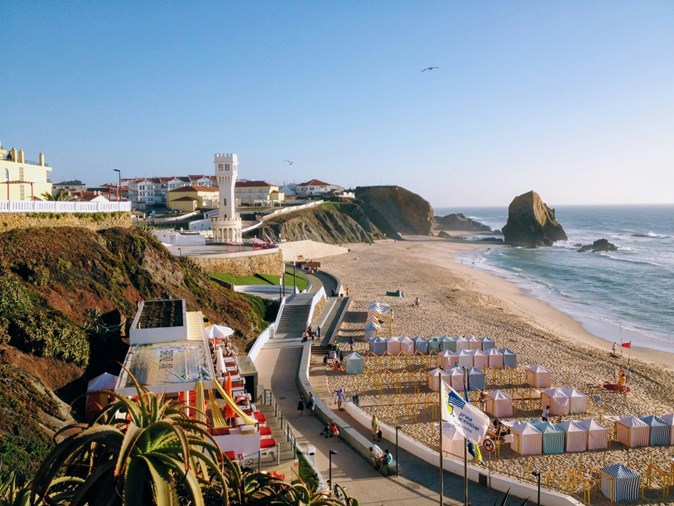
The emerging opportunity is not simply to extract more value from the ocean. It is to create value more intelligently. Offshore renewable energy, marine biotechnology, low-impact aquaculture, cleaner shipping, ocean data and coastal resilience are all examples of areas in which economic growth can be linked to environmental responsibility.
Portugal’s Atlantic position gives the country a natural role in this transition. Its relationship with the sea is historical, but its future potential is increasingly technological.
The Atlantic is also a strategic communications corridor. In July 2026, Google completed the connection of the Nuvem transatlantic subsea cable between the United States and Portugal, reinforcing Portugal’s role as a digital gateway between Europe, North America and other international markets.
Tourism is important, but it is not the whole story
Portugal’s coastline is central to its international appeal. Beaches, surf, natural landscapes, coastal cities and a mild climate have helped make the country one of Europe’s most recognisable destinations. But the economic influence of tourism reaches well beyond hotels and holiday accommodation.
According to Statistics Portugal, tourism activity generated an estimated total contribution of €34 billion to the Portuguese economy in 2024, equivalent to 11.9% of GDP. This estimate includes direct, indirect and induced effects across the wider value chain.
Tourism supports restaurants, retail, mobility, cultural activity, construction and local services. It can also encourage investment in the regeneration of buildings, public spaces and infrastructure.
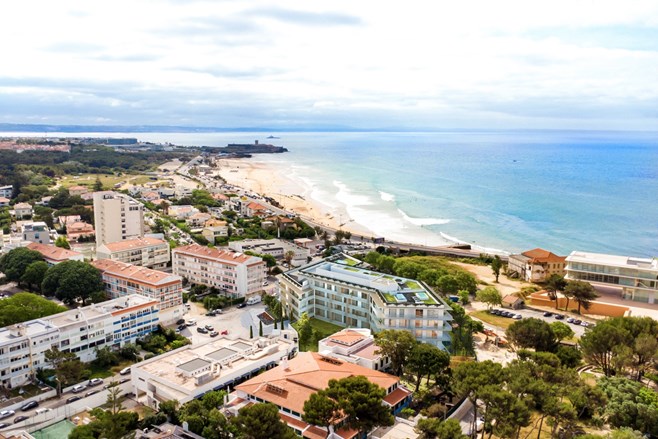
For coastal countries, the challenge is to preserve the characteristics that created the attraction in the first place.
The coastal premium is ultimately a quality premium
The appeal of a coastal location is often described as a property premium. Sea views, proximity to beaches and limited developable land can all contribute to scarcity. But the deeper premium is not the water itself. It is the quality of life that can develop around it.

A successful coastal location combines its natural setting with good infrastructure, thoughtful urban planning, public access, cultural identity and year-round economic activity. Without these elements, a beautiful coastline may remain a seasonal destination rather than a resilient community.
This distinction matters for long-term investment.
Short-term demand can elevate prices. Long-term value requires places that continue to function for residents as well as visitors: places with schools, healthcare, mobility, employment, public space and a sense of belonging.