

Craftsmanship and “Made in Portugal”: one of the greatest strengths of Portuguese house construction
In Portugal, construction today operates under increasing pressure: shorter deadlines, tighter cost control, and the need to respond to high demand, particularly in major urban centres.
At the same time, the market has become more demanding. The value of a home is no longer limited to location or size. Quality of execution, materials, and how a building ages have become decisive factors.
It is within this context that Portuguese craftsmanship is regaining relevance, not as an abstract concept, but as a concrete practice on site.
Craftsmanship: where design becomes construction
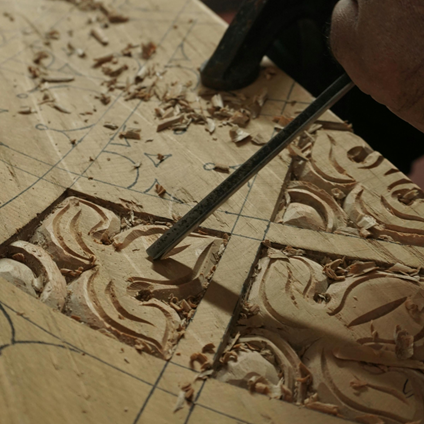
In residential projects, craftsmanship is measured through execution. It is reflected in how different materials meet, in the precision of finishes, and in the ability to maintain the integrity of the design throughout construction.
In Portugal, this is visible in very concrete elements:
- In well-executed limestone or granite stonework, which protects and defines openings over time.
- In bespoke oak carpentry, which enhances comfort, acoustics, and spatial use.
- In the careful installation of ceramic tiles or azulejos, ensuring visual continuity and durability.
- In custom-designed and fabricated metal railings, combining structural strength with aesthetic precision.
These examples are part of everyday construction when there is proper control over execution.
Materials: performance beyond aesthetics
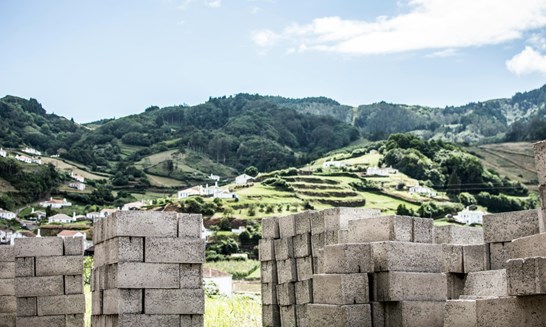
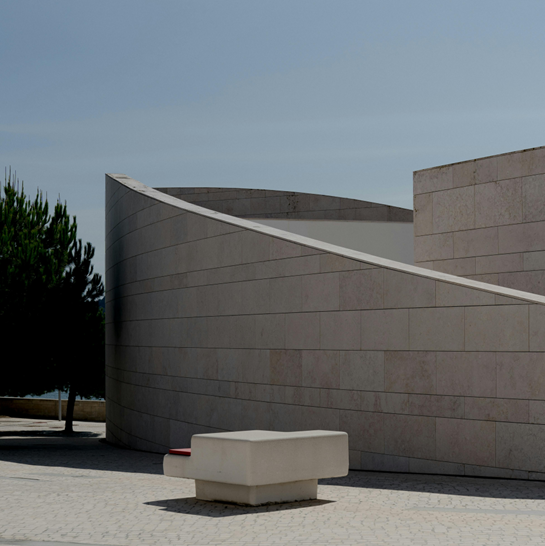
Construction in Portugal has a direct and distinctive relationship with materials. Each brings specific advantages when properly applied.
Natural stone, whether limestone, granite, or marble from the Alentejo, stands out for its durability, low maintenance, and ability to age well. It also contributes to thermal mass and creates a strong connection to place.
Wood, often oak or pine, adds thermal and sensory comfort, improves acoustic performance, and allows for bespoke solutions. Unlike many industrial materials, it can be repaired and adapted over time.
Ceramics, including traditional azulejos and porcelain stoneware, offer resistance, versatility, and ease of maintenance. However, their performance depends directly on execution (alignment, cutting, and layout are critical).
Metal, in iron, steel, or brass, ensures strength and precision, playing a key role in railings, window frames, and finer structural elements. When well executed, it enables a level of detail difficult to achieve with other materials.
Traditional finishes, such as renders, plasterwork, and lime-based solutions, remain relevant for their breathability, compatibility with existing buildings, and ability to create continuous, durable surfaces.
In all cases, the material alone does not define quality, its application does.
“Made in Portugal”: an embedded capability

“Made in Portugal”, in the context of construction, should not be understood merely as origin. It is, above all, a capacity for execution.
This capability is built on three key dimensions.
- The continuity of trades. Stonemasons, carpenters, metalworkers, plasterers, and tile installers continue to play a central role, often with years of accumulated experience.
- On-site adaptability. Construction in Portugal still retains a strong capacity to adjust in real time, allowing specific situations to be resolved without relying exclusively on standardised solutions.
- Proximity between design and execution. When effectively coordinated, this proximity leads to better control over detail and greater coherence in the result.
Together, these factors enable the delivery of projects with a high level of detail, even in complex contexts.
Where value is created
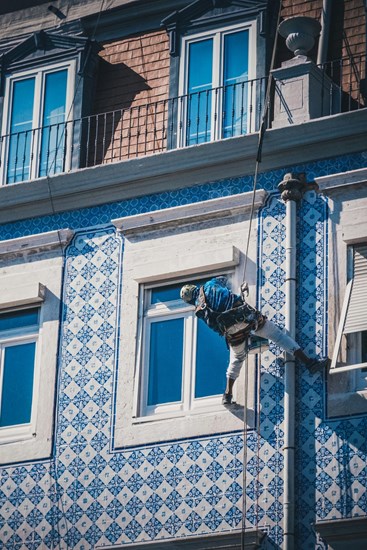
Buildings where there is strong control over materials and execution tend to age better, require less corrective maintenance, maintain a more consistent perception of quality, and stand out in an increasingly homogeneous market.
For those who inhabit these spaces, these qualities are evident, even without technical knowledge. They are felt in the tactile quality of materials, in the precision of finishes, and in how the space performs over time.
Detail is not merely decorative, it is fundamental to the value of the asset.
The current challenge
Despite this foundation, the sector faces clear constraints: a growing shortage of skilled labour, constant pressure on construction timelines, increasing reliance on standardised solutions, and the difficulty of balancing cost with level of detail.
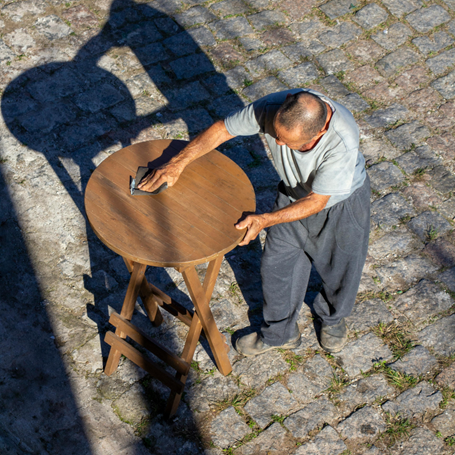
These trends put at risk one of the key strengths of construction in Portugal: the ability to deliver material quality with rigor.
What future for craftsmanship?
The future of construction in Portugal does not lie in choosing between efficiency and craftsmanship, but in integrating both.

The foundation exists, in materials, in trades, and in the accumulated experience of construction practice. But its continuity is not guaranteed. In an increasingly competitive market, the difference will lie less in what is designed and more in how it is built. And that remains, to a large extent, one of the most relevant advantages of “Made in Portugal”.
Sources and references
INE - Instituto Nacional de Estatística
AICCOPN - Associação dos Industriais da Construção Civil e Obras Públicas
Confidencial Imobiliário
LNEC - Laboratório Nacional de Engenharia Civil
Ordem dos Arquitectos