

When mobility becomes a strategy
Political cycles shift. Tax frameworks evolve. Regulatory landscapes tighten. Access to markets changes. Families become increasingly international. For globally active investors and families, the question is no longer “Should we move?” but rather “How do we create optionality without disrupting our current life?” Portugal has emerged as one of the most strategic answers to that question.

A European foothold built for Global Living
Many European residence permits are designed for individuals who intend to spend the majority of the year in-country. They require substantial physical presence and impose limits on prolonged absences. Portugal’s Golden Visa framework was structured differently.
It is widely referenced for its reduced physical stay thresholds, commonly cited as 7 days during the first year and 14 days during each subsequent two-year period. These thresholds are subject to renewal requirements and full regulatory compliance, but they offer something rare in Europe: Flexibility.
What “Access” Means
A Portuguese residence permit provides more than travel flexibility; it establishes a formal legal connection to a European jurisdiction. Holders are entitled to live, work, and study in Portugal and benefit from short-term travel across the Schengen Area, in accordance with EU rules. Residency is also a path to permanent residence or citizenship.
These outcomes depend on regulatory compliance, renewal processes, documentation standards, and adherence to physical presence rules. A residency permit creates long-term European access when maintained. In a fragmented geopolitical environment, that anchor can represent significant strategic value.
Why a Plan B?
For globally active families, residency planning is less about relocation and more about expanding future choices. It introduces geographic diversification into personal and intergenerational planning, reducing exposure to regulatory, political, or economic concentration risk.
Families evaluate a second residency through multiple lenses:
- Education access across European institutions
- Healthcare system diversification
- Geographic risk distribution
- Long-term mobility security
- Intergenerational continuity
Why Portugal: Stability within evolution
Portugal continues to stand out within Europe for its institutional stability, EU membership, and predictable regulatory framework. While several countries have restricted or closed investor residency programs, Portugal chose to restructure its model in 2023, shifting focus from residential real estate to regulated investment routes.
At the same time, immigration and nationality policy remain part of ongoing political discussion. Proposals have been raised in Parliament regarding potential changes to citizenship timelines - including extending the residence requirement from five to ten years.
However, these proposals are under debate and have not been enacted. The Golden Visa framework remains active and governed by the current legal rules. For investors, this underscores an important principle: residency strategy should be grounded in present law, while remaining attentive to legislative evolution.
The Investment Route
Under the current legal framework, one of the qualifying pathways for Portugal’s Golden Visa is a €500,000 investment into eligible Portuguese regulated investment funds.
These funds operate under CMVM supervision and must comply with specific regulatory criteria, including investment allocation requirements and governance standards. This framework ensures that capital is deployed through structured, transparent vehicles aligned with the broader Portuguese economy. This route provides two layers of strategy:
- A regulated capital allocation structure
- Eligibility within the current Golden Visa framework
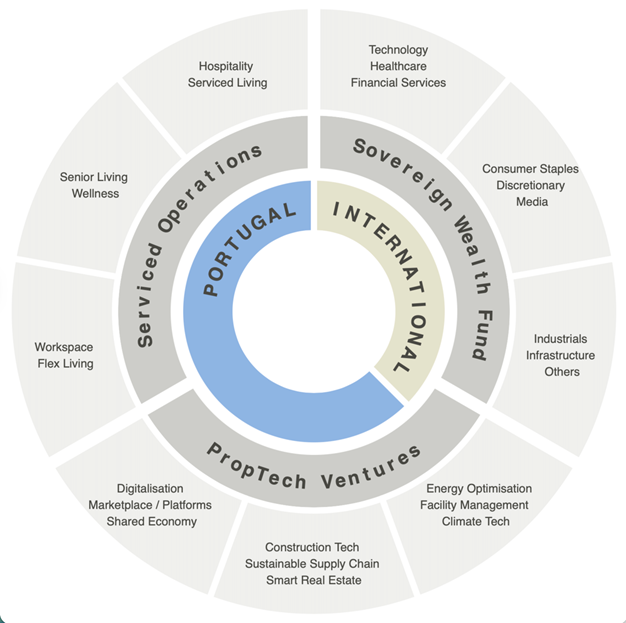
The EQTY Global Growth II Fund is positioned within this regulated environment. It offers diversified exposure across strategic partnerships with Sovereign Wealth Funds, Hospitality and Welness operations, PropTech and Venture ecosystems, while meeting the eligibility criteria under the existing legal rules.
For investors and families seeking European access through institutional-grade capital structuring, the focus is on selecting a regulated vehicle aligned with both residency objectives and long-term portfolio strategy.

A European foothold built intentionally
At EQTY, we approach mobility as long-term strategic planning, aligning regulated investment structures with clearly defined residency objectives. The EQTY Global Growth II Fund is positioned within the current legal framework to support investors who seek a structured pathway to Portugal, while maintaining international flexibility.
A European foothold becomes part of a broader capital and life strategy built for global lives.